

Issue 19 | Fall 2026
Dear Friends,
Violence can happen in seconds. When young people act on responses shaped by trauma, something as small as a stare that lasts too long or a moment of disrespect can spiral into a decision with life-changing consequences.
Roca has spent nearly 40 years learning what it takes to help the highest-risk young people pause long enough to make a different choice.
First, it takes safety. For many of the young people we serve, Roca is the first place they remember feeling safe enough to let their guard down. Safety is woven into everything we do, from transformational relationships that build trust, to the very design of our buildings. It is the foundation that makes change accessible.
Then, it takes the right skills. Emotional regulation has to be learned, and like any skill, it gets easier the more you do it. Our young people practice Rewire CBT over and over—in classrooms, on street corners, and on transitional employment work crews—until they can pause before reacting when it matters most. Frontline staff need to learn those skills too, so they can manage their own emotions and guide young people through their hardest moments.
If we are serious about disrupting cycles of violence on a broader scale, we need to communicate what we‘ve learned. It’s why the Roca Impact Institute trains violence interrupters nationwide, and why we share stories like the ones that follow—from a jail in Boston, to a training academy in Philadelphia, to a young woman juggling parole and child welfare requirements.
Thank you for following us on this journey and always believing that change is possible.
Peace,

Molly Baldwin
Founder & CEO

In the News
How Baltimore Is Targeting Friend Groups to Prevent Shootings
An inside look at the mayor’s Group Violence Reduction Strategy targeting those closest to violence — and then offering a real way out.
Read in the Baltimore Banner
Young Mom Graduates from Hartford Program that Helped Her Find Stability
For Taylish Molina, Roca Hartford has been more than just a program — it became family.
Read in CT Insider
Working to Effect Change and Build Community
For five years, architecture firm ARC has partnered with Roca to design spaces where young people feel welcome and where trust and openness can grow.
Read on ARC

Springfield Grand Reopening
Wednesday, November 4 | 10:00 – 11:00 AM
For young people who carry the weight of violence every day, walking into a room and feeling safe can be the first step toward something different.
We’ve spent 2026 rehabilitating and modernizing Roca’s Springfield site, with a new design that centers safety while encouraging young people’s healing and growth.
The building is the foundation. What happens inside it, from relentless outreach to Rewire CBT skill-building to economic mobility programming, is what turns that foundation into a life beyond violence.
Join us as we welcome the community to this reimagined space for the first time.

INSIDE THE CIRCLE
Again and again over two days inside Nashua Street Jail, participants returned to the same thought: I wish I had paused.
That simple reflection became the thread running through a Peacemaking Circle facilitated by Roca and Nashua Street Jail staff, where young people and corrections staff, together, spent two days talking about trauma, accountability, family, forgiveness, and the decisions that shape our lives.
One corrections officer shared a story from early in his career: a disagreement over food escalated into a conflict that stayed with him for months—not because of what happened, but because he realized he had reacted to the behavior instead of asking what was underneath it. Years later, the Circle helped him understand that moment differently, and reinforced a practice he now tries to bring into every interaction: pause, dig deeper, and respond differently. His willingness to reflect alongside the young people he supervises set the tone for the conversation.
Another participant wasn’t even supposed to be there. He attended only because someone else had been removed from the unit. Carrying the weight of both incarceration and personal struggles outside the jail, he spent two days listening, reflecting, and sharing. At the end of the Circle, he thanked the program lead for choosing him, saying he now believed he was meant to be there. He left in tears, telling the group he intended to lead differently going forward.
Several participants expressed a similar sentiment: the Peacemaking Circle was the first place they could remember feeling safe enough to be vulnerable.
Like many of Roca’s partnerships, this Circle almost didn’t happen. Staffing shortages and changing locations created repeated obstacles. What made it possible wasn’t logistics—it was trust. Relationships built over time with Nashua Street Jail leadership kept everyone committed until the Circle could happen.
That trust made room for something rare: young people and the officers that supervise them taking steps toward behavior change, together.
Roca learned the practice of Peacemaking Circles from the Tagish Tlingit people in the Yukon Territories.
Hot off the Press
Nearly 2 in 3 Roca young women are confirmed or suspected victims of sex or labor trafficking.
That finding comes from the latest external evaluation of Roca’s Young Women’s Program by Tufts Interdisciplinary Evaluation Research (TIER).
TIER studied how Roca is able to engage young women impacted by trafficking, who are too often left behind by other programs that require a higher level of stability and compliance. At the same time, they investigated the experiences of young women navigating complex, interconnected public systems—and how Roca steps up when those systems fall short.
“I don’t know how to phrase this, but a statistic. But that’s what I feel like Roca don’t want me to become. You know what I mean?”
TRAINING PEACEKEEPERS IN PHILLY
“You can’t ask someone to case manage other people through their trauma if they’ve never learned to manage their own.”
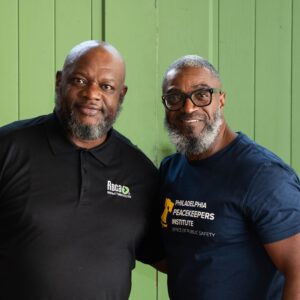
Credible messengers working on the frontlines of violence are often told that their personal experiences are enough for them to go out in the streets and stop violence in their neighborhoods. But we now understand that’s not enough. Community violence intervention (CVI) is notoriously difficult work, exposing staff to high levels of stress and trauma, and they need real tools and professional development skills, including the skills to maintain their own wellness.
This year the City of Philadelphia Office of Public Safety brought in the Roca Impact Institute to help fill this gap in their city. Together we launched the Philadelphia Peacekeepers Institute: a training academy where credible messengers and their supervisors learn to interrupt violence more effectively, safely, and sustainably.
The Peacekeepers Institute curriculum centers on Rewire CBT, Roca’s non-clinical adaptation of Cognitive Behavioral Therapy that helps people move out of a reactive “survival mode” into the reasoning part of the brain. Participants learn to apply Rewire CBT both to themselves and the community members they serve—because they can’t manage other people’s trauma before they learn to manage their own.
Philly isn’t the only city that can benefit. We designed this training model to be flexible, so that in the future it can easily adapt to other communities with their own local history and context. The Peacekeepers Institute is a template that can be applied wherever credible messengers are doing the work.
Learn a Rewire CBT Skill
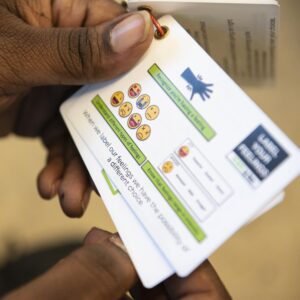
Rewire CBT is a relatable and non-clinical version of cognitive-behavioral therapy that helps young people heal from trauma and rewire their brains to achieve long-term behavior change. The 7 Rewire CBT skills help young people understand the relationship between what they think and say in their heads, what they feel in their bodies, and what they do in response.
Rewire CBT Skill #6 Flex Your Thinking
We all tell ourselves stories. A friend doesn’t text back, so they must be upset with you. A coworker is quiet in a meeting, so they must not like your idea. Before long, you’re reacting to something you made up in your own head.
Now imagine that a young person in a corner store notices a guy staring at him. He’s looking at me like I’m weak. He’s judging me. His chest tightens, his face gets hot, and within seconds he’s ready to react. For young people who have grown up where respect can mean survival, that instinct makes sense. But acting on it can lead to fights, arrests, or worse.
Flex Your Thinking teaches young people to pause and test their thoughts before acting on them. Is it true, or am I going off a feeling? Is it helpful, or is it pushing me toward trouble? From there, they learn to reframe: He’s disrespecting me becomes I don’t know what’s going on with him, and fighting’s not worth it.
That small shift can create enough space to walk away. With practice, young people get to choose their next move instead of letting a single thought choose it for them.

We’re Hiring
Roca is looking for excellent candidates who are committed to helping young people at the center of urban violence transform their lives. We are hiring for several positions in Baltimore MD, Hartford CT, and across Massachusetts, including:
- Director of Roca Western Massachusetts to oversee staff and programming, strengthen external partnerships, and shape the next chapter of Roca’s work in Western Massachusetts.
- Pre-Release and Juvenile Justice Specialist to engage young people who are approaching release from incarceration and prepare them for successful reentry into the community.
- Youth Workers to take Roca’s mission to the streets. Youth Workers relentlessly reach out to young people in the community, build transformational relationships, and teach Rewire CBT skills to support behavior change.
And many more!
If you’re excited by Roca’s mission and think one of these jobs would fit you well, we invite you to apply or forward the job listings to a friend.
Issue Archive
Recent Issues
-
Issue 19 | Fall 2026
October 2026 -
Issue 18 | Spring/Summer 2025
July 2025 -
Issue 17 | Summer/Fall 2024
September 2024 -
Issue 16 | Spring 2024
May 2024 -
Issue 15 | Winter 2023
December 2023
